
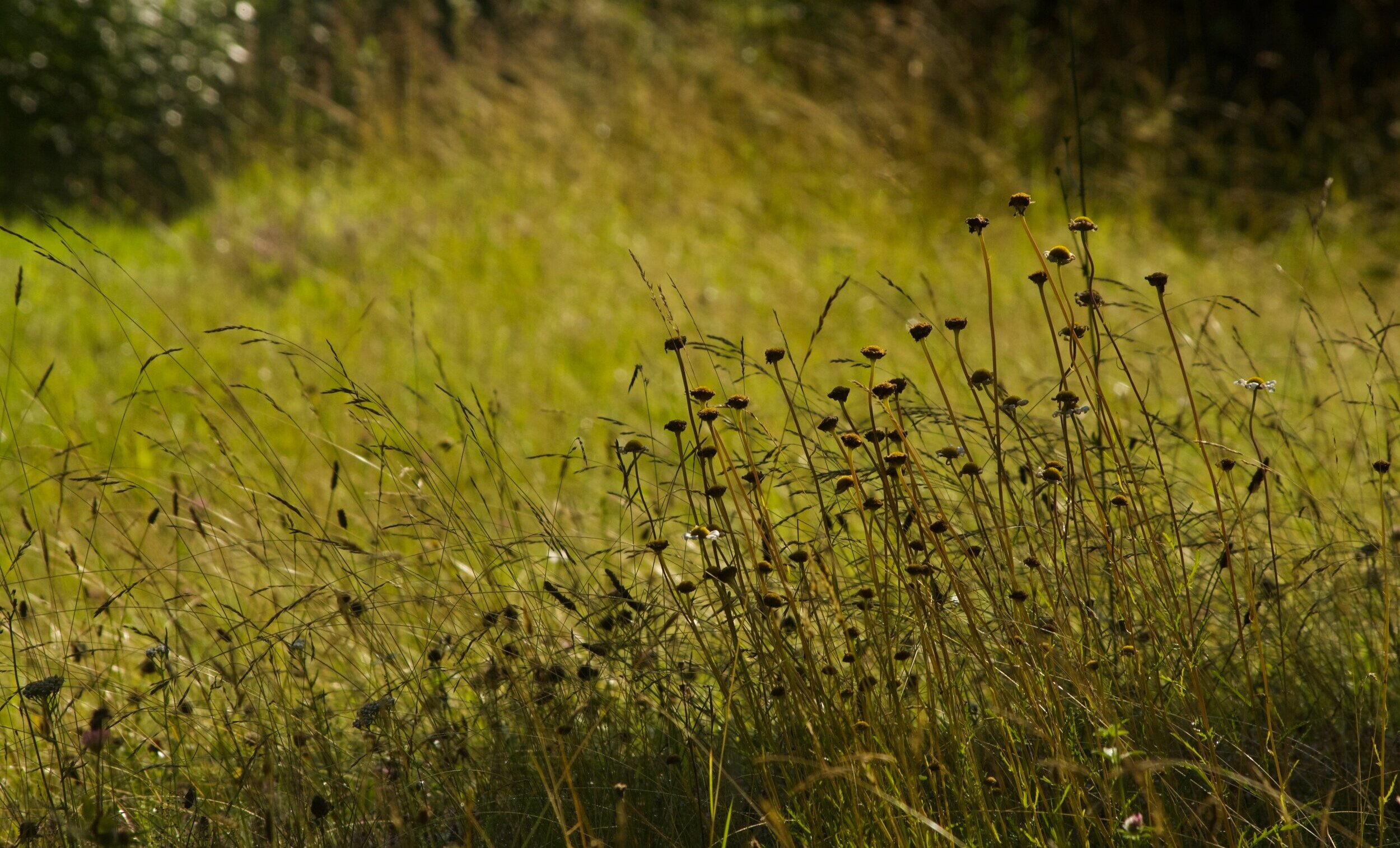
What makes a garden wild?
At Untamed Gardens we work to create space that is truly shared by humans and wildlife—space that is beautiful and welcoming for you while being a real home for insects and animals. But what actually makes a garden wild?
Harnessing ecology
A wild garden takes as its inspiration and foundation naturally occurring plant communities. If we want to create usable space for for an insect or animal we should look to create plantings that emulate the plant communities where they choose to live. Our New England landscape offers examples of a variety of habitats—full-sun meadows, shaded woodland floors, shrubby wetlands and fields, rocky balds—which gives us a diversity of styles to work from. We strive to select species that might naturally occur at a site and create plant groupings that might naturally grow together.
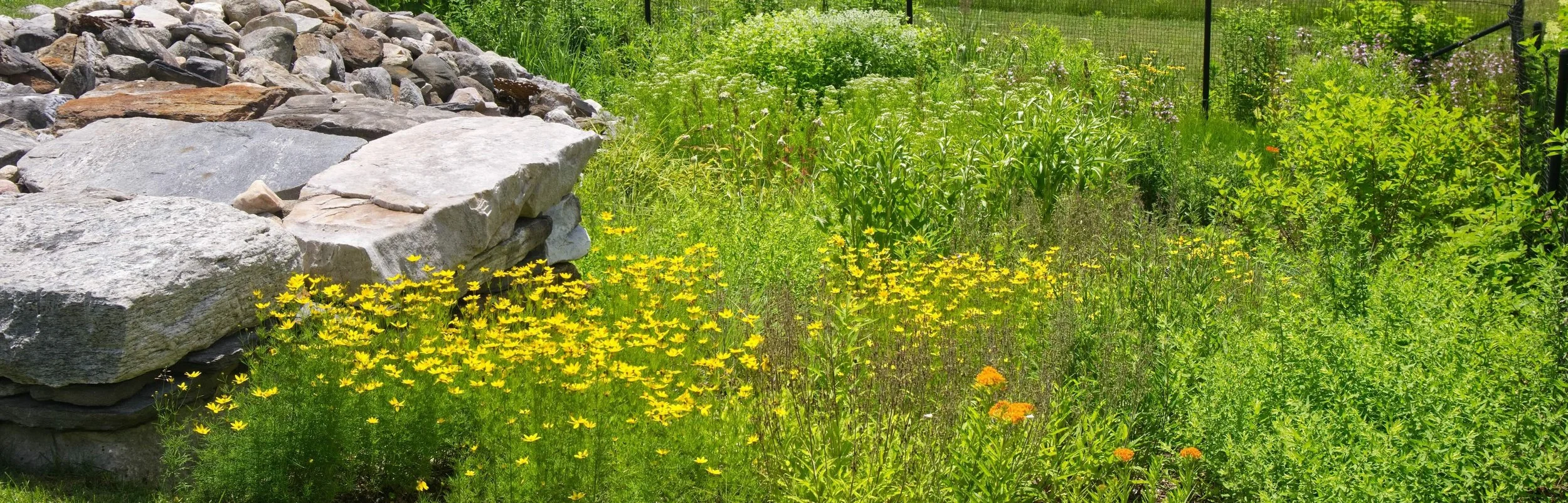
The most obvious visual trait of wild gardens—at least in the New England landscape—is fullness. Left to their own devices plants take up all the space that is available to them. Wild gardens are planted closer together than traditional landscaping and the plants are encouraged to grow into one another. If plant selections are appropriate and the layout is done right this fullness has the added benefit of lowering maintenance as the dense plant community suppresses weed growth.
Retaining the spirit of a garden
Wild gardens may require emulating existing plant communities but gardens are also intentional spaces. We can bring structure and definition into wild gardens by focusing on a few things—notably edges and plant groupings.
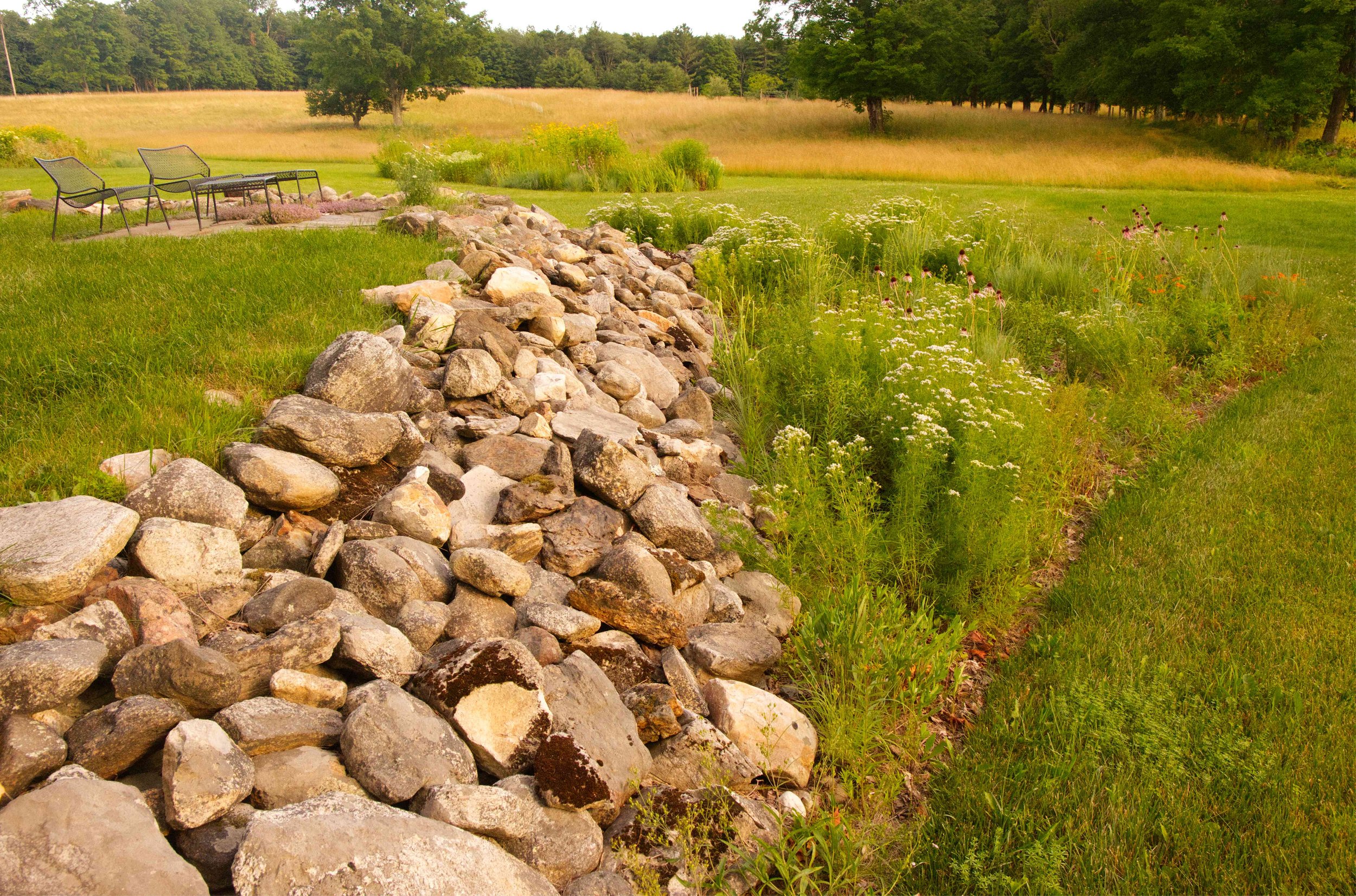
Our garden designs almost always begin with human foot traffic, whether that takes place on lawn, decks, patios, or stepping stones. Getting the layout of the human space right is our first priority, and then the interface between this area and the plantings is our next focus both in design and in ongoing maintenance. Creating and maintaining crisp, neat, intentional edges brings shape and definition to even a planting that is overflowing with volume.
Working thoughtfully with plant groupings brings some order into the plant community itself. In a wild planting density and fullness are non-negotiable, but massing species in large clumps instantly creates simple patterns and texture blocks for the eye to lock on to.

Benefits of wild gardens
What we love most about wild gardens it that they bring us into closer contact with the many living things we share the landscape with. It is joyful to watch bees and beetles at work, and gratifying to know that growing baby birds have abundant healthy food. We each live in a unique corner of the world, and we think our homes should reflect and support that truth.
And the final benefit of wild gardens? If we succeed in working with plant communities rather than against them it is possible to create beautiful, unique gardens that require lower maintenance than our traditional landscaping.
Untamed Gardens serves the South Berkshire towns of:
Monterey
New Marlborough
Southfield
Mill River
Sandisfield
Otis
Sheffield
Great Barrington
Alford
Housatonic
Stockbridge
Lee
Norfolk, CT
Colebrook, CT
Reach out to schedule a consultation.
Whether you’re ready to dive in with a full design, or are just trying to figure out how you want to manage your landscape, I look forward to chatting.